The Amorphous Problem and a Sketch of a Solution
We’re trapped in the belly of this horrible machine
And the machine is bleeding to death
― Godspeed You Black Emperor, “Dead Flag Blues”
There are severe problems with western civilization and the suicidal course it’s on. We all feel the same vague unease. We intuit that the driver of the bus we’re all on is dead, and the vehicle is accelerating towards the cliff. We’re grabbing the wheel, but the wheel doesn’t seem to do anything. We’re holding votes on whether we should apply the brakes, but the voting mechanism is broken at best, corrupted at worst.
All of the old techniques fail to work. All of the old theories fail to give insights.
The problems are correlated and connected, and the failure of the old techniques and theories and structures are likewise correlated.
There is something very wrong with the world, and it’s only getting worse. We all know this. We feel it in our bones.
What the hell is going on? Why is this happening?
And most importantly: what are we going to do about it?
Because it demands large-scale paradigm destruction and major shifts in the problems and techniques of normal science, the emergence of new theories is generally preceded by a period of pronounced professional insecurity.
― Thomas S. Kuhn, The Structure of Scientific Revolutions
Every 500 years or so civilization goes through a major reformation. A crisis arises, and the old solutions don’t work, and new solutions and forms must be found. The Bronze Age. The Bronze Age Collapse. The age of Mediterranean empires. The Christianization of the Roman Empire. The Collapse of the Roman Empire. The High Middle Ages. The Enlightenment and the birth of the Westphalian Nation State system. And now, here, at the “end of history”, we find that history has not actually ended. Once again, the old system contained within its fundamental thesis the seeds of its own destruction.
In 2024, we have perfected democracy. The law, in its infinite majesty, allows everyone to vote. Elon Musk gets one vote, just like Crazy Willie who lives under the bridge with three shopping carts. A professor of mechanical engineering gets one vote, just like a Cool Wine Aunt who watches The View every day. The system has been made fully legible, and it has been fully exploited. The political coalitions and egregores work their magic, through the media, through the NGOs, through the universities, through the DoD…through the voters themselves.
If the right to vote were expanded to seven year olds … its policies would most definitely reflect the ‘legitimate concerns’ of children to have ‘adequate’ and ‘equal’ access to ‘free’ french fries, lemonade and videos.
― Hans-Hermann Hoppe, Democracy: The God That Failed
Democracy is the god that failed.
So that’s it, then? Take the black pill, because everything is over, the game is lost?
No, exactly the reverse. We are at the dawn of a new golden age. A golden age of technology, of free association, of liberty, and of wealth.
What’s the solution? …and who’s going to build it? [ We are - and ‘we’ includes you! ]
How are we going to do it?
We’ll answer those questions, but first we have to understand the problem in detail. We have to understand…
How We Got Here
To understand who we are, and how we architected the crisis we find ourselves in, we have to understand what we are…and that means understanding how humans evolved.
The Earth exists in a pocket of negative entropy, which allowed mere atoms to form into increasingly complex structures, culminating, but not ending, in humans (we’re omitting some steps here). Human brains are sufficiently complex that we can negotiate cooperation with a relatively low degree of genetic relatedness. This facility exists only in primates. It has existed for only around 2 million years, a blip in the existence of the planet.
It took another 1.8 million years for primates to evolve into early humans, giving us just 200,000 years of evolution living in tribal bands, typically of under 150 people. These bands were more violent than modern humans, and not as smart. Human tribal living was a mix of cooperation to hunt and defend each other as well as inter-group competition for mating. The inter-group competitive nature of human tribal living created a phenomenon known as reverse dominance hierarchies (aka egalitarian leveling), a socio-political impulse that remains prominent in human organization today.
Roughly 10,000 years ago, humans invented farming. The innovation of farming was the foundation of permanent human settlements, which facilitated the development of social technologies that allowed humans to organize into groups larger than social gossip-based accounting allows. This necessitated the development of organizational technologies like oligarchies, autocracies, and later republics and corporations. These were anti-egalitarian technologies, and they caused selection for men capable of forming hierarchies and working together at scales previously unprecedented in human history.
There’s one more piece to the puzzle: religion and culture. Another unique aspect of humanity is our ability to entertain ideas, and for ideas themselves to compete in evolutionary ways for presence in human brains (essentially Dawkins’ memetics). While religions and cultures are not the same, they have the following similarities:
They actively change the incentive structure and behavior for both individuals and groups.
They defend against other memes. Adopting a religion or a culture specifically excludes the adoption of at least some other ideas.
They are more successful if they defend against ideas that threaten the religion or culture itself.
They are more successful if they help the humans hosting them survive and procreate, though it can take generations for this to play out (the celibate Shakers lasted over 200 years).
They provide a foundation for human interaction below formal rules, and sometimes below conscious thinking.
The take-away: evolution found that the ability for humans to engage in the transmission of information (“culture”) is adaptive. It’s what let us conquer the earth, the oceans, and the skies…but it also created a security vulnerability, a severe one.
Since we humans evolved to transmit and share culture, we are, effectively, computers with no or minimal anti-virus protection…and hostile memes have evolved to exploit this ecological niche.
Memetics have proven the most powerful way of organizing humans to date.
Both communism and egalitarian democracy have conquered more people than any warlord or king.
Our western enlightenment culture and its goals of liberty have has been root-kitted. How do we fight back? How do we create an artificial immune system for our culture? We’ll answer that, but first we need to understand a bit more about how evolution has forged us, and what exactly we are.
What We Are
First, we’re not all the same, and we’re not blank slates. The realities of evolution mean that people will not have the same inclination for the truth, let alone the ability to discern it. Anyone who has made it this far into this essay is already a weird person, evolutionarily speaking. The reality of human variation applies to every human attribute, up to and including views about the world we’re taught are completely independent of evolution.
When we said “we all feel the same vague unease” in the opening section, we lied. Only some of us do.
It’s not by chance that a small subset of people, “white hierarchical men” (1/6th of white men or about 5% of the population) see the world radically differently than everyone else.
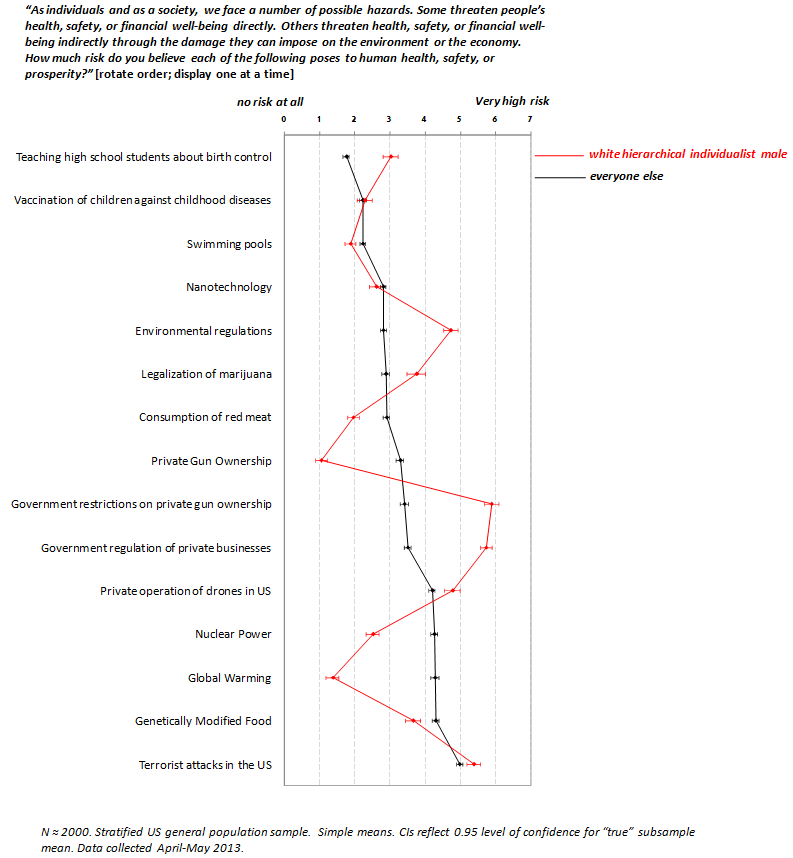
Second it explains the insanity, the “none of this makes any sense; why are these crazy people saying crazy things, and why is no one objecting?” feeling we’ve all had for the last 15 years. Evolution cares about what works, which is only sometimes what is true.
Memes can be symbiotic, or they can be parasitical. Memes look for hosts that can sustain them and help them reproduce. People who are overly altruistic and/or faulty thinkers are ideal hosts. They often adopt memes against their evolutionary self-interest. While everyone makes mistakes in meme selection, for the most part people are selecting memes that, based on their (frequently subconscious) evolutionary expectations, would benefit them.

Both of these are attempts to propagate memes that would evolutionarily benefit the propagator, but not everyone who adopts them.
Third, despite the world being more rational than it might seem at first to a truth-oriented person, things really are crazy and headed in a bad direction. Mass communications has been replaced with social media and peer-to-peer networks. This spreads memes like air-travel and sex tourism spreads disease. Memetic competition is happening at an unprecedented rate and scale. New meme complexes are displacing aging meme complexes at a rapid pace.
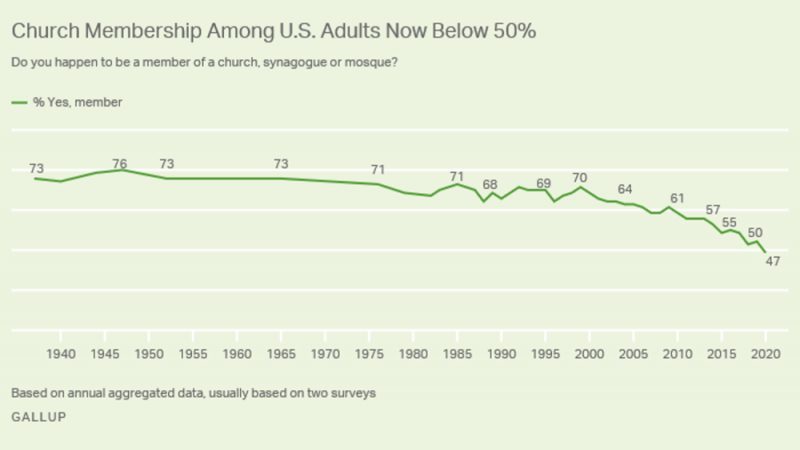
Some consequences of the new memes: despite humanity having unprecedented wealth, birth rates are falling. Despite having unprecedented food and fitness knowledge, we’re more physically unhealthy than ever. Despite having unprecedented human capital and wealth, it’s harder to build things than ever.
Success in modernity is largely about evading the memetic traps and behavioral sinks that we’ve invented for ourselves.
We are not at the end of history. The post-internet world, especially post social media, is the beginning of an extraordinary era. Things are only going to accelerate…and we intend to be in the race, flooring the gas pedal, helping to define our shared future in a way that’s optimistic, pro-liberty, and pro-humanity.
What We Know
Some details are amorphous, but others are crystal clear. We know the following:
Existing attempts at political and cultural reforms are attempts to create public goods. The returns on achieving reforms are not captured by those who produce them, which leads to under-investment. We need to take a page from venture capital, and capitalism more generally. A proper solution must capture at least some of the value it generates, so that it can grow and perpetuate itself. A proper solution recognizes the marginal and path-dependent nature of change. Every huge world-changing company starts small, ships a minimum viable product, and solves real problems for the first round of customers. A solution to save civilization that eventually works for millions of people must pass through and evolve from one that once worked for just hundreds or thousands.
Hardware is as important as software. By this we mean: the individuals who build and operate things are as important as the memes and structures that they build. Past attempts at creating pro-liberty orders have failed because of changes in the people interpreting and enforcing rules, not just because of the formal structures of the rules themselves. Thomas Massie as dictator of the United States would be superior to any conceivable rewrite of the United States Constitution.
The philosophy of negative liberty is valuable, but insufficient. Simplistic rules like the “non-aggression principle” permit a wide-range of behaviors, many of which are harmful or counter-productive to maintaining a successful polity. Additionally, the average person has no philosophy and few absolute morals. Persuading the average person to adopt our values is less a matter of argument, and more about giving them a better uniform (culture) and set of incentives. Superior products win in the marketplace. The way to get people to adopt new structures is to build a superior product that solves their problems.
Strong leadership is required, but monarchy is not the answer. Democracy is clearly an inferior way of organizing or it would produce better outcomes in corporations and governments. Autocracy is not correct, either. Autocrats can get out of control and autocratic power transitions result in incentive alignment problems. Groups with clear leaders, checks on leadership, and clear rules for transitioning leadership, are the best humans can do. While power striving is inevitable (and sometimes good), an ideal system would reward power for external accomplishments, not in-group competition, which is often zero- or negative-sum.
Where We Go: A Sketch of the Solution
Our knowledge implies an answer along the following shape:
What we build will not look precisely like anything that came before. There is no going back. We will never RETVRN. We can learn from the past, but we must create something new.
We must focus highly on the selection mechanism for the hardware - the people involved in building. If you let the entire world into a high-trust, meritocratic system, you will no longer have that system. You have the entire world striving to replace you and the things you love with the lowest common denominator.
We must select for people who are intelligent and trustworthy, with high agency and high ability. Small groups of these men with these traits have shaped world history before. They can do so again. Larger groups of men can be assembled by those who follow them, or participate in the structures they create.
While formal rules are a requirement, we must equally focus on culture. A culture that reinforces not just negative liberty but positive values, such as enterprise, family formation, self-sufficiency and a culture of “making, not taking”.
We must attempt to change the incentives. We cannot expect people to solve the world’s most fundamental problems through charity alone. What we build must provide incentives, whether they be resources or prestige.
We must eventually capture and hold a physical territory where men like us can build and achieve great things.
We must act with strength and intention. The world was never changed by any men who acted with anything less.
In short, we are creating a new mechanism (a legal structure, a financial structure, and a software structure) that will let us build community and responsive governance, achieve shared goals, and resist entryism. The first step, the v0.1 release, is the Minimum Viable Product: something good enough to use, to solve real problems, to grow liberty, to reduce transaction costs, to help real people in New Hampshire and elsewhere to collaborate and build better businesses and better government. We will use this structure ourselves, debug it, change it, and evolve it as our plan touches the real world and gets evolutionary feedback from actual use.
Who We Are
“We” includes, soon enough, you.
But who’s the “we” at the heart of this?
We’re not ready to disclose - in public - everyone involved in this project anymore than woke race communists are willing to admit they run the universities and media. Suffice it to say we’re a group of men with influence and accomplishments, with the spirit of the Pine Tree Riot in our hearts, and a desire for grand human achievement in our brains.
And we want you to join us.
Your Next Steps
We’ve already started.
If this sounds like something you If you want to help us build, join the club.
Last modified on 2025-10-15